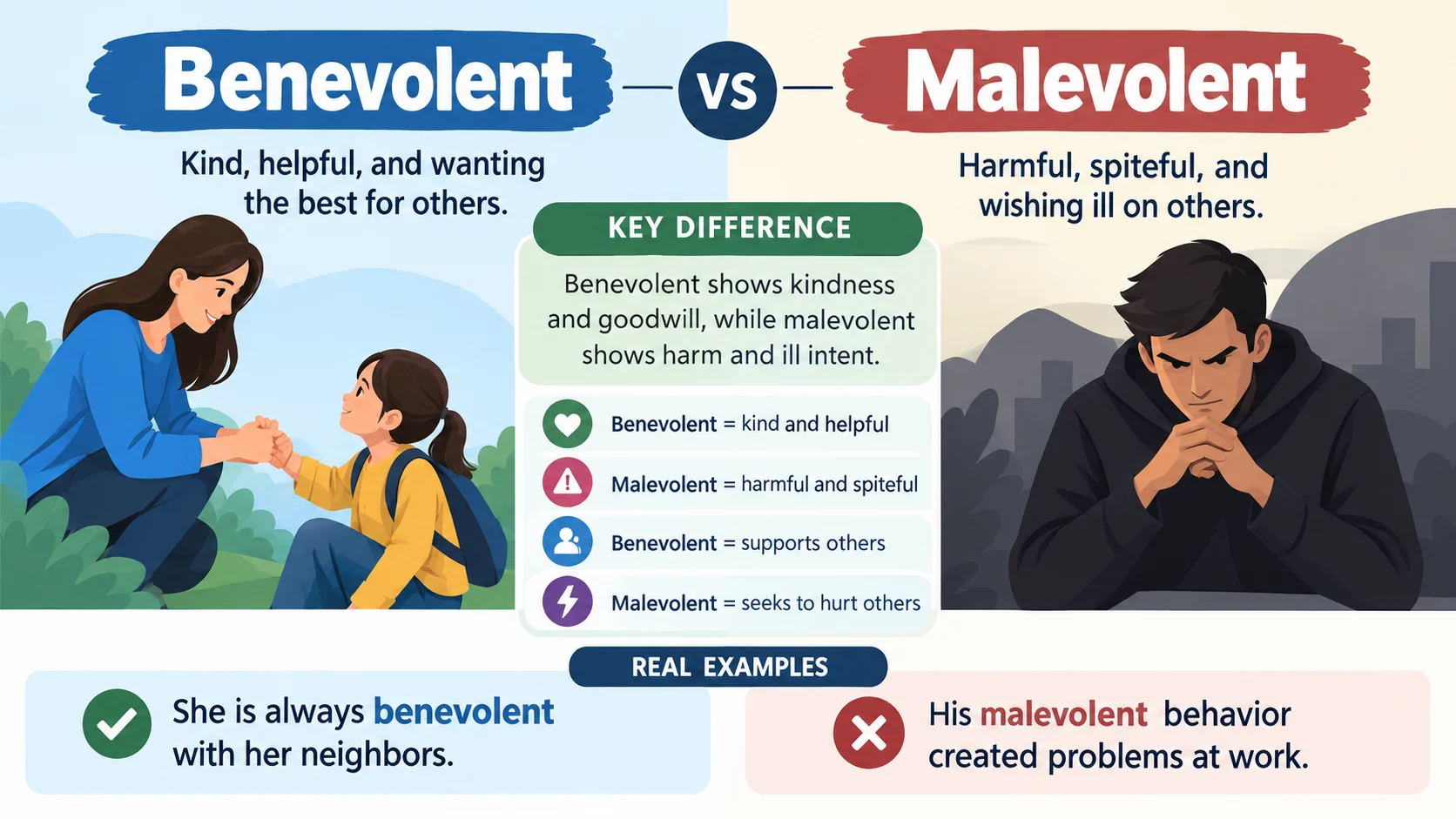
The strongest opposite of benevolent is malevolent. Benevolent means kind, well-meaning, and inclined to do good for others, while malevolent means wishing harm or acting with ill intent. Depending on context, words such as cruel, malicious, and unkind can also function as antonyms.
Direct and Strong Antonyms
The following words are genuine antonyms of benevolent in common American English usage.
| Antonym | Tone or Nuance | Example Sentence |
|---|---|---|
| Malevolent | Direct opposite; harmful intentions | The villain’s malevolent plans threatened the entire town. |
| Malicious | Intentionally harmful or spiteful | She spread malicious rumors about a coworker. |
| Cruel | Deliberately causing pain or suffering | The cruel treatment shocked everyone who witnessed it. |
| Unkind | Lacking kindness or consideration | His unkind comments hurt her feelings. |
| Hostile | Aggressively unfriendly | The customer became hostile during the discussion. |
| Malignant | Harmful, destructive, or evil in intent | The organization fought against a malignant influence within its ranks. |
Many dictionaries identify malevolent as the clearest semantic opposite of benevolent, while words such as cruel, malicious, and unkind serve as strong contextual opposites. (Cambridge Dictionary)
Contextual and Subtle Opposites
The best antonym depends on what aspect of benevolence is being emphasized.
Benevolent Meaning: Kind and Well-Meaning
| Context | Best Opposite | Why It Fits |
|---|---|---|
| Goodwill toward others | Malevolent | Opposes goodwill with ill will. |
| Kind behavior | Unkind | Focuses on behavior rather than motives. |
| Compassionate treatment | Cruel | Emphasizes causing suffering instead of helping. |
Example:
- A benevolent teacher encourages struggling students.
- A cruel teacher humiliates students for mistakes.
Benevolent Meaning: Generous or Charitable
Sometimes benevolent refers to generosity or charitable giving.
| Context | Best Opposite | Why It Fits |
|---|---|---|
| Charitable giving | Stingy | Opposes generosity. |
| Helping others financially | Miserly | Highlights reluctance to give. |
| Selfless support | Selfish | Focuses on self-interest over helping others. |
Example:
- The benevolent donor funded a community center.
- The stingy donor refused to contribute despite having ample resources.
In these situations, malevolent may not be the most precise opposite because the discussion centers on generosity rather than harmful intent. (Cambridge Dictionary)
Words That Seem Opposite But Are Not
Selfish
Many people assume selfish is the direct opposite of benevolent. While selfishness often conflicts with benevolence, the two words address different ideas.
- Benevolent = wishing good for others.
- Selfish = prioritizing one’s own interests.
A selfish person may ignore others without actively wishing them harm. A malevolent person goes further by harboring harmful intent.
Indifferent
Indifferent is another commonly confused word.
- Benevolent implies positive concern.
- Indifferent implies lack of concern.
Indifference is the absence of caring, not necessarily hostility or ill will. Because of this, it functions as a contrast rather than an exact antonym.
Common Grammatical or Semantic Confusions
Benevolent vs. Beneficent
These words are related but not identical.
- Benevolent focuses on kind intentions.
- Beneficent focuses on producing good results.
A benevolent manager may genuinely care about employees. A beneficent policy may improve employee well-being regardless of personal intentions. (Recycling English)
Malevolent vs. Malicious
Both words are opposites of benevolent in many contexts, but they differ slightly.
- Malevolent emphasizes harmful intent or ill will.
- Malicious often emphasizes deliberate actions intended to hurt someone.
Example:
- A malevolent rival secretly hoped for your failure.
- A malicious rival actively spread false information about you.
Subtle Tone Differences
Choosing the right antonym affects tone and precision.
Malevolent is formal and often appears in literature, psychology, and serious writing.
Example:
- The novel’s malevolent antagonist manipulated everyone around him.
Cruel is stronger emotionally and highlights suffering.
Example:
- The cruel punishment outraged the community.
Unkind is milder and common in everyday conversation.
Example:
- It was unkind to exclude her from the invitation.
Malicious suggests intentional harm.
Example:
- The email contained malicious accusations.
Selecting the right word helps readers understand whether the issue involves hostility, selfishness, harsh behavior, or deliberate harm.
Frequently Asked Questions
What is the direct antonym of benevolent?
The most direct antonym of benevolent is malevolent. Benevolent means kind, charitable, and well-meaning, while malevolent means wishing harm or possessing ill will toward others. This opposition reflects intent rather than merely behavior. (FreeDict)
Is cruel an antonym of benevolent?
Yes, cruel can function as an antonym of benevolent in contexts involving treatment of others. However, malevolent is usually considered the more precise opposite because it directly contrasts goodwill with harmful intent. (Cambridge Dictionary)
Which antonym should I use in formal writing?
For formal writing, malevolent is often the strongest choice when discussing motives or intentions. If you are emphasizing behavior rather than intent, words such as cruel, malicious, or hostile may be more accurate depending on context.
Practical Word Choice
1. Identify the Intended Meaning
Determine whether benevolent refers to kindness, generosity, compassion, or goodwill before choosing an antonym.
2. Match the Context and Tone
Use malevolent for ill intent, cruel for causing suffering, malicious for deliberate harm, and stingy when discussing generosity.
Conclusion
The strongest and most widely accepted opposite of benevolent is malevolent because it directly contrasts goodwill with ill will. When the focus is on a person’s intentions, this pairing provides the clearest semantic opposition.
Context still matters. A discussion about generosity may call for stingy or selfish, while a discussion about behavior may call for cruel or unkind. The best antonym depends on the specific meaning you want to express.
When choosing an opposite for benevolent, focus on whether you’re describing motives, actions, or character. Which antonym best fits the example you’re working with?
